GUIDE · 2026-08-13
Nakji-Bokkeum vs. Nakji-Jeongol: Stir-Fry vs. Hot Pot Boundary
By Bokkeum Curator
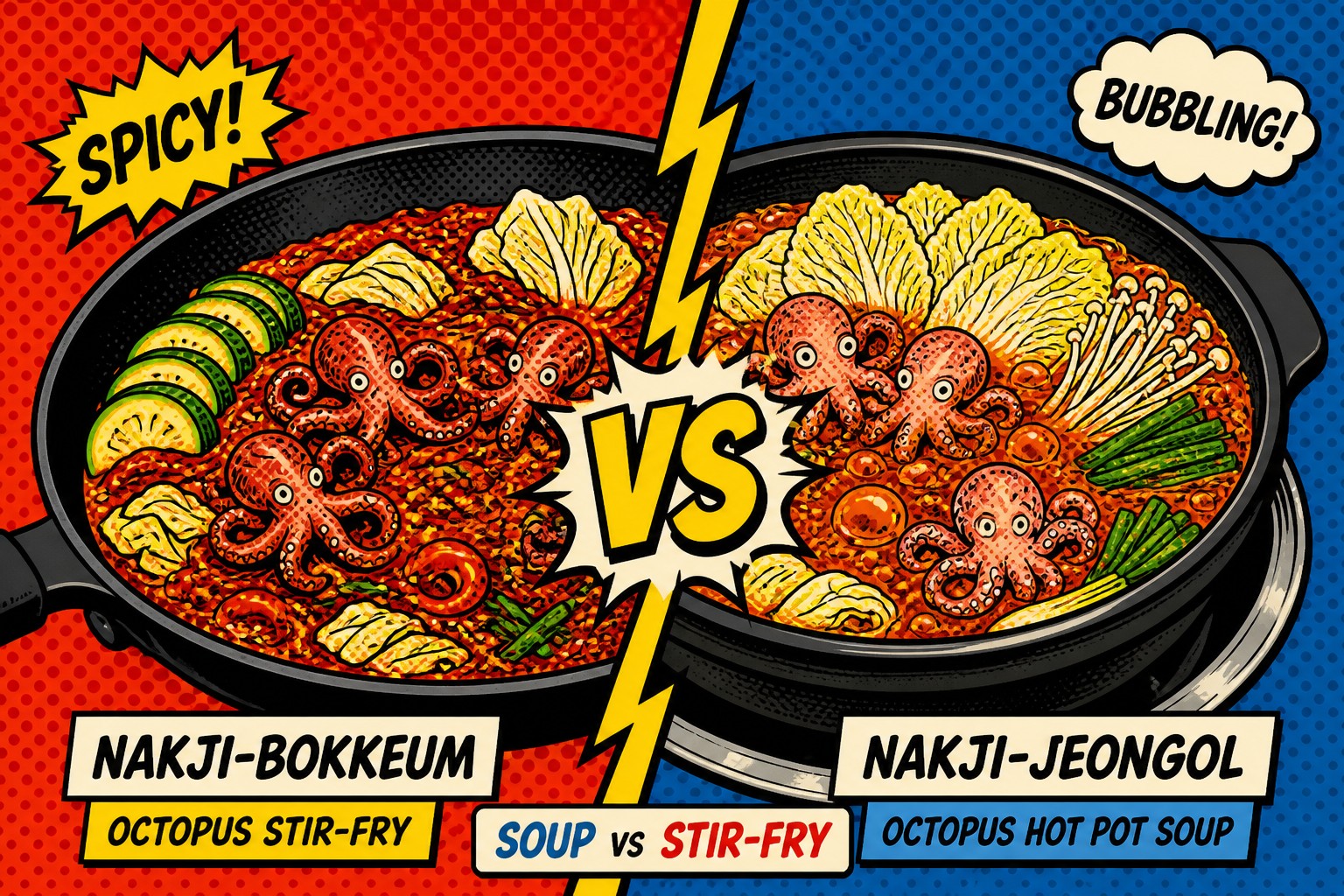
One octopus, two pots — how liquid amount separates a bokkeum that clings from a jeongol that simmers.
TL;DR
One octopus, two pots — how liquid amount separates a bokkeum that clings from a jeongol that simmers.
Nakji-bokkeum and nakji-jeongol share base ingredients (octopus, gochugaru, onion, tteok, veg) but split on liquid. Bokkeum reduces to a glaze that clings to rice; jeongol maintains a shared hot-pot broth diners cook into and scoop from communally — same shopping, different dinner.
If you like rice coating, stay bokkeum: sauce plus octopus juice should reduce 70% so the spoon drags through glaze. If you like ladling, add 400 ml stock for jeongol and keep heat at a lazy bubble where octopus cooks while diners add more tteok or ramen.
Vegetable entry differs. Bokkeum vegetables join before or with the octopus for a tight sear; jeongol vegetables frame the pot around broth and are eaten as they soften. Timing is the tell — bokkeum is 6 minutes total, jeongol is 15 with pauses.
Spice dilutes in jeongol: broth mutes heat, so season 30% stronger at the start if you plan jeongol; bokkeum concentrates, so season lighter and add fresh pepper at the table. Over-seasoned bokkeum cannot be fixed by adding water without drowning glaze.
For home hosts serving mixed spice tolerance, make a master batch as bokkeum-mild, then split a second shallow pan with extra chili for adults. Two heats from one prep, one pot of rice.
More Korean food
Relevant pages on the two hub sites — recipes and a BBQ directory on bulgogi.ai, street rice cakes on tteokbokki.ai.
- bulgogi.ai — recipes & BBQ directory →Marinades, cuts, and a USA Korean BBQ map.
- tteokbokki.ai — street rice cakes →School-cart sauce, rose, mala, and tteok types.
- Korean BBQ directory →Grill vs stir-fry is the split — send tabletop nights to bulgogi.ai.