GUIDE · 2026-08-09
Bossam, Suyuk, and Jeyuk: Steamed vs. Stir-Fried Pork Family
By Bokkeum Curator
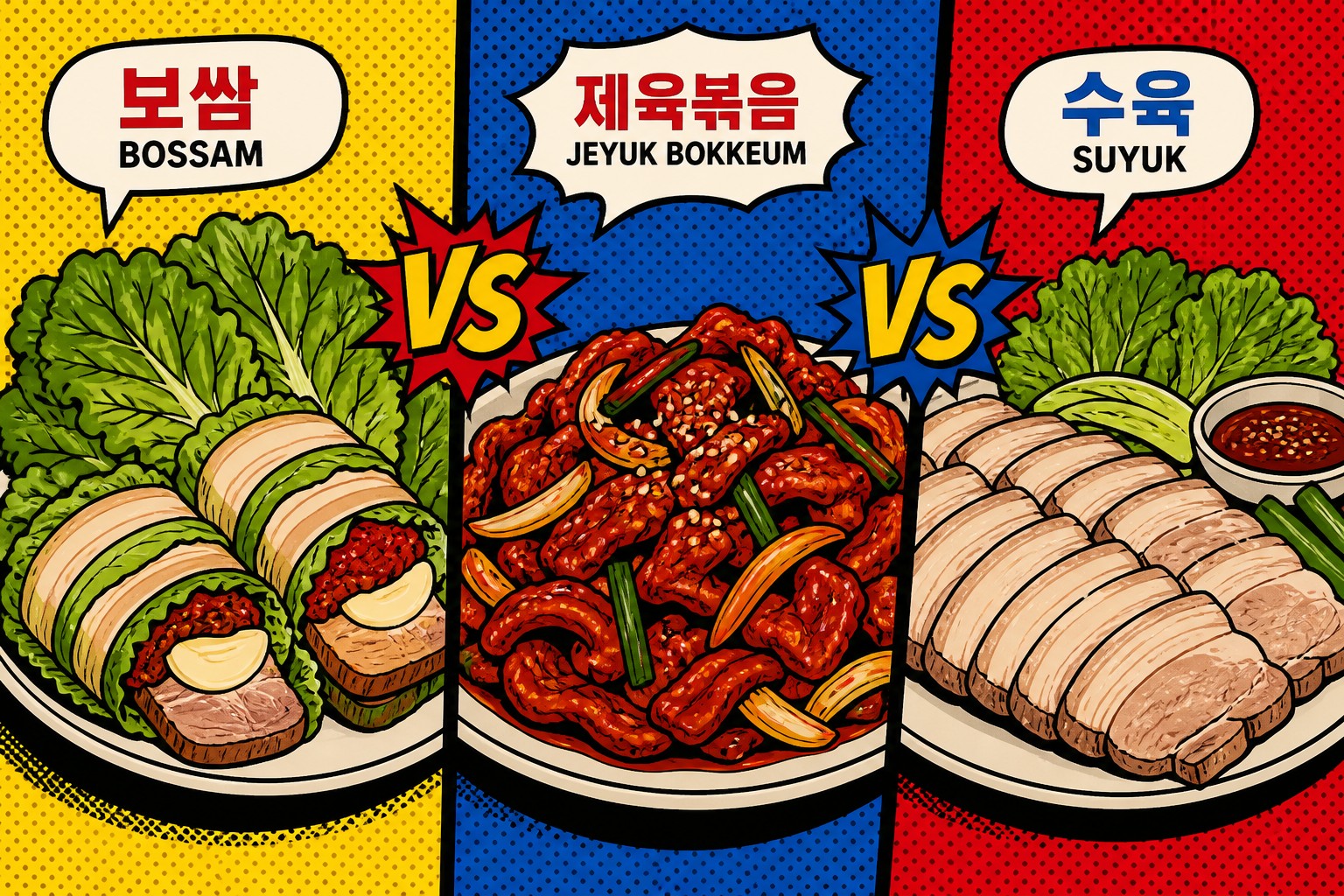
Three porks, three pots: suyuk (plain boiled), bossam (seasoned boiled), and jeyuk (spicy stir-fried) explained as a system.
TL;DR
Three porks, three pots: suyuk (plain boiled), bossam (seasoned boiled), and jeyuk (spicy stir-fried) explained as a system.
Suyuk is the plain steamed/boiled pork (often belly or shoulder) simmered with ginger, garlic, bay, doenjang, and onion until 90% tender, then sliced and dipped in salted shrimp or doenjang — clean pork flavor without sauce.
Bossam takes suyuk further: wrap slices with kimchi, raw garlic, salted shrimp, and ssamjang in lettuce or salted cabbage leaves. Bossam is a construction, not just meat; the wrap vegetables do half the seasoning work so the pot stays lightly salted.
Jeyuk-bokkeum is the opposite route: thin slices, fast sear, heavy sauce. It shares the same pork shoulder source as bossam but diverges at the pan. If suyuk is a confit logic, jeyuk is a stir-fry logic — long low vs. short high heat.
Broth reuse links them. A single pork pot can produce suyuk first, then bossam wraps, then reduce its broth for kimchi jjigae the next day; nothing wasted. Jeyuk stands alone because its marinade already spent the seasoning, but leftover jeyuk oil seasons bokkeumbap beautifully.
Order at restaurants by occasion: bossam for group sharing with makgeolli, suyuk for pure pork appreciation with soju, jeyuk for weeknight solo rice plates. One animal, three social contexts — the Korean table teaches range through method, not just cut.
More Korean food
Relevant pages on the two hub sites — recipes and a BBQ directory on bulgogi.ai, street rice cakes on tteokbokki.ai.
- bulgogi.ai — recipes & BBQ directory →Marinades, cuts, and a USA Korean BBQ map.
- tteokbokki.ai — street rice cakes →School-cart sauce, rose, mala, and tteok types.
- Korean BBQ directory →Grill vs stir-fry is the split — send tabletop nights to bulgogi.ai.